
662. Maximum Width of Binary Tree
Đề Bài
Given the root of a binary tree, return the maximum width of the given tree.
The maximum width of a tree is the maximum width among all levels.
The width of one level is defined as the length between the end-nodes (the leftmost and rightmost non-null nodes), where the null nodes between the end-nodes that would be present in a complete binary tree extending down to that level are also counted into the length calculation.
It is guaranteed that the answer will in the range of a 32-bit signed integer.
Example 1:
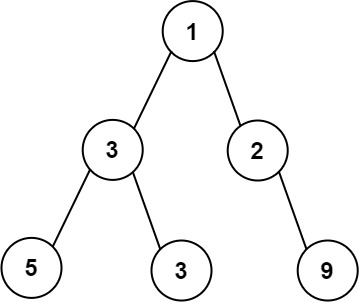
Input: root = [1,3,2,5,3,null,9]
Output: 4
Explanation: The maximum width exists in the third level with length 4 (5,3,null,9).
Example 2:
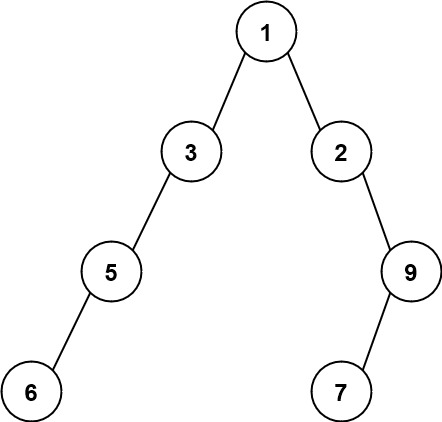
Input: root = [1,3,2,5,null,null,9,6,null,7]
Output: 7
Explanation: The maximum width exists in the fourth level with length 7 (6,null,null,null,null,null,7).
Example 3:
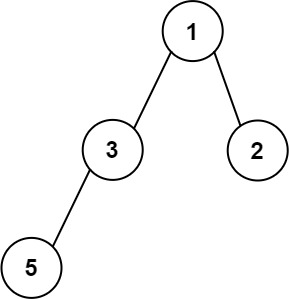
Input: root = [1,3,2,5]
Output: 2
Explanation: The maximum width exists in the second level with length 2 (3,2).
Constraints:
- The number of nodes in the tree is in the range
[1, 3000]. -100 <= Node.val <= 100
Thuật Toán & Kỹ Thuật
⏱️ Thời gian
O(n)
💾 Không gian
O(1)
Lời Giải
C++
0662-maximum-width-of-binary-tree.cpp
/**
 * Definition for a binary tree node.
 * struct TreeNode {
 *     int val;
 *     TreeNode *left;
 *     TreeNode *right;
 *     TreeNode() : val(0), left(nullptr), right(nullptr) {}
 *     TreeNode(int x) : val(x), left(nullptr), right(nullptr) {}
 *     TreeNode(int x, TreeNode *left, TreeNode *right) : val(x), left(left), right(right) {}
 * };
 */

class Solution {
public:
    int widthOfBinaryTree(TreeNode* root) {
        if (!root) {
            return 0;
        }

        queue<pair<TreeNode *, unsigned long>> mq;
        mq.push({root, 1});
        unsigned long ans = 0;

        while (!mq.empty()) {
            int n = mq.size();

            ans = max(ans, mq.back().second - mq.front().second + 1);

            while (n--) {
                auto [node, val] = mq.front();
                mq.pop();

                if (node->left) {
                    mq.push({node->left, val * 2});
                }

                if (node->right) {
                    mq.push({node->right, val * 2 + 1});
                }
            }
        }

        return (int)ans;
    }
};